A pair of children, one boy and one girl, runs intensely through a soccer field. Upbeat pop music plays in the background. The boy dribbles the ball with his feet and his face drips in sweat. His foot kicks the ball (with sound effect) to the girl and the ball flies through the air. She stops it with the side of her foot and proceeds to the soccer goal post. Without a moment's hesitation, she uses all her strength and scores. She yells in excitement and runs to the boy. They high five each other in celebration and drop to the ground in exhaustion. The girl turns her head and smiles at the boy, which in turn causes the boy to meet eye contact with her. The boy is drawn in by her beautiful eyes and a graphic match of her pupils transitions into a wristwatch.
The girl, now 16 years older, rushes out the door as she checks the time on her watch. She puts her suitcase inside her car and gets into the driver's seat. She looks back at her best friend's house, the boy now older. She sighs and grabs her cell phone. Her face shows her torment as she texts her best friend goodbye. Sorry, but this is such a big opportunity that I can't pass up. I hope you understand. Keep in touch, ok?
The boy reads the text and throws his phone on the floor in anger.
The girl turns over her car engine and drives away.
The boy looks at his calendar, which states, "April 19: Carly at airport 2pm". He walks back to his bed, but trips on a overused soccer ball. A flashback of the two of them playing soccer occurs. Snapping back to reality, he checks his alarm clock that indicates a half and hour til 2. He drops the ball and runs out his door, adrenaline pumping.
Sprinting down sidewalks, the sound of his heartbeat is prominent. He manages to get glimpses of the time on oversized clocks on buildings. Attempting to cross the street, he nearly escapes being hit by a speeding car. Returning to his constant running speed, the guy's face reveals his desire to reach the airport before 2pm.
The girl continues to drive on the freeway, approaching closer to the airport by the minute. Images of clocks are shown and the girl speeds up her driving while the guy sprints faster. 20 minutes to go.
Parallel action between the girl and the boy as they both try to reach their destination on time. The boy's face shows concern about being late and not being able to express his true feelings to Carly. He breathes heavily and turns a corner and arrives at the bus stop. He checks the time on his phone. 15 minutes left.
The bus arrives and he runs up the steps. Reaching into his pocket for 2 dollars, he realizes his pockets are empty. Looking at the bus driver in desperation, he gives a sorrowful look. The driver, sympathizes with him and allows him to ride the bus free. (another stroke of luck perhaps)
The girl pushes her car brakes and the tires come to a halt. The doors open quickly and her trunk clicks open immediately.
The bus tires come to a halt a moment later and the boy flies out the door. He turns his head this way and that in search of the girl. He spots her in the midst of the crowd, and calls out her name. She turns her head in slow motion and their eyes meet once again. Staring in deadlock, she is shocked, but smiles gratefully and adoringly.
"I literally ran all the way from home. Call me crazy, but I couldn't let you go without telling you how much I don't want you to leave... We've grown up together and it's going to be so different being apart... I love you, that's why I don't want to to go. But, it's also because of this reason that I want you to live your life beyond this place". - says the boy.
"Is that so? Well, this changes things now doesn't it?..." - says the girl.
Friday, September 30, 2011

Friday, September 9, 2011
New Bell Schedule- Broadcast Critque
Pre-production:

My partner and I came up with the idea by trying to explore a topic never discussed before. We realized that there was a new bell schedule this year and wanted to capture people's thoughts about it on camera. We first asked Mrs. Shanks for an interview because she is the head of the school and was involved in the change of the schedule. The rest of the students and the teacher we found to interview were available on the spot, so we did a quick interview. Our questions were direct, yet some of them were open ended questions in which they were asking for the interviewees' opinions.
Production Quality and Composition and Audio:

All interviews were given on campus. For the student interviews, we chose trees and the Mustang statue for the backgrounds. For the teacher interviews, we chose the teachers' offices/ classrooms. Our b-roll clips are of students in their classrooms working. We used pans, pov shots, wide angle shots, and worms eye view shots for the b-roll. One of the most creative shots is of Mrs. Gonzales, a history teacher, is teaching her class and the camera is in a low position. It is a pov shot (perspective of a student in his/her seat) and we see her in between the bodies of two students. The shot is well-balanced, with her students and desks in the foreground, Mrs. G. in the midground and the board and windows in the background. The teacher is on one of the intersections when following the rule of thirds. In her classroom, we filmed a wide shot of her class shouting in excitement, close-ups of students writing in planners, and waist shots of Mrs. G. teaching. Our camera moves were for the most part smooth when we panned across the video lab. The lighting for the student interviews outside was semi-low key because there was no sunlight to act as our natural light source. However, the teacher and principal interviews came out nice because the indoor lights created a high key lighting. Our focus was not blurry at all because we used manual focus on the camera. Our audio came out clear and without static in our voice-over and interviews.

Script:
Our VO began with an introduction to the new bell schedule. We grabbed the audience's attention by pointing out how the new bell schedule is something new at school and that it may be confusing for most people. After the opening VO, the interviewees describe their concerns and hopes about the new schedule. The closing VO is the most important because we show the audience the schedule in chart form and then list the periods dropped per day. We let the audience read the scrolling text for themselves instead of having a voice interfere. We wanted people to remember the schedule by heart at the end of the segment.
Editing:

It was difficult to really film the "schedule", so my partner and I filmed students working in their classrooms. We didn't use special transitions besides fade in and out audio and fade to black for the video. I created the titles in Livetype and either the title was in motion or the background was. We didn't add special effects or filters to our shots because we wanted to depict reality. There are no jumpcuts in our footage. Our interview and b-roll cuts smoothly.

Overall
What I like about our piece is that it is an original concept and we had a lot of interesting b-roll. I also like how it is direct and informative. If we had more time, I would have found a wider range of interviewees besides Seniors. Also, The most important lesson I can take after working on this segment is to take time on finding interviewees that can answer questions well and plan the type of b-roll desired more efficiently.
What do you like best about your piece? What would you add or do differently if you had more time? What would you say is the most important lesson you can take with you after working on this project?
Wednesday, September 7, 2011
Character in Time

A pen scribbles away furiously on a notebook. The teacher's voice is rambling in the background. The bell rings and right away students shout in excitement. The classroom clears and a young girl is left alone in her seat. She slowly packs up her stuff in her backpack and goes out into the hall way. The hallway is a blur as students quickly walk, run, and skip past her from left and right. She spots a large group of friends gossiping in the corner by the water fountain and she lets out a heavy sigh.
The girl makes her way back home on foot. As she passes by houses in the quiet suburb, she suddenly passes by a bush of red roses. She picks a single one off the bush by its stem. The thorns prick her fingers and she yells in pain. She stares at her punctured fingers and wonders what else could make her day worse: her lack of friends or her bleeding fingers. Quickly ignoring the pain, she holds the rose to her nose and smells the sweet fragrance. Then the realization hits her. She forms a subtle smile and her blue eyes grow brighter as she realizes how much the rose represents her. Time slowly stops as she goes into a daydream. Like the rose, she also has thorns and flaws that she isn't proud of (a flashback of her tormenting days in school) . Yet, in a way she has the opportunity to bloom into a beautiful flower in the future (flash forward of her working in her successful career) . She snaps back to reality and swiftly walks home with a blissful gleam in her eyes and her head held high.
Monday, August 29, 2011
Between You and Me - Short Film Camera Analysis

This short film, directed by Patryk Rebisz, is composed of entirely 2,000 still images. It entails the story of a young woman who takes pictures of every detail of her life. When an horrendous attack causes her to leave behind her beloved camera, a man must attempt to track down the mysterious woman with only the clues of the camera's pictures.
Analysis

Dominant: Our eyes in this picture is attracted to the only character in the shot. The woman positioned a little to the left of the mid-center. She is posing as she takes a picture of herself in her house as she starts her day.
Subsidiary contrasts: The main eye stops after taking in the dominant is the camera itself and the woman's hands. They both take up the remaining room of the image. We usually look for animated things, not stationary. It's interesting to see the woman through her camera screen because its a new perspective choice.
Angle: In the image above, the angle of this shot is neutral or eye level. We are looking at the protagonist directly at her as she is taking a picture of herself. Also, in the picture below is a high angle of the second protagonist, the man, who is trying to find the home of the woman to return her camera.

Lighting Key: The lighting has a high key. The rising sun is the source of the light and gives the shot a bright glow. There is a high contrast between the brightness of the sun and the dark figure of the woman. She is almost silhouetted out because of we cannot see the light on her directly.

Shot and Camera Proxemics: As we see the character's morning routines, there is a small camera proximity. The shot of the woman spreading peanut butter on toast is a close up. The proxemic is demonstrating the intimacy the audience is developing for the characters as they get to know their habits and personalities. In contrast, the camera has a large proximity during the assault scene with the young woman. Because of the lack of intimacy and violence, the director chooses to shoot the scene in a extreme long shot. This portrays the helplessness of the woman as the audience feels far away from the action.


Color values: What is the dominant color? Are there contrasting foils? Is there color symbolism? The dominant color of the picture above is mainly black and brown. These are gritty colors and symbolizes evil and corruptness. The assaulter has evil intentions of taking advantage of the helpless young woman.
Lens/ Filter/ Stock: A still image camera was used to create the short film. Although the film was jumpy, it was fluid enough to avoid being distracting. It added a uniqueness that complemented the storyline. A wide angle lens was used throughout.
Density: Throughout the film, there is moderate visual information packed into the image. Mostly, the visual information consists of the character(s) and/ or the background of the city/ what action they are doing. The texture is moderate in the film.
Composition: In the film, there are mostly horizontal lines as the characters look in certain directions. Characters are usually in the center or side of the shot in CUs.
Form: The form is open. The image suggest a window that arbirarily isolatees a fragment of the scene in the visual elements are carefully arranged and held in balance.
Framing: The framing in a way is restricting. Because of the use of still images, the characters have to be in all the shots, forming the framing to be tight The characters have room to move around as the camera moves with them and continues taking pictures of the actors.
Film Style
According to David Bordwell and Kristin Thompson, there are four general steps when analyzing film style in a film or of a director.
1. The film has a basic three story act in the narrative and story is linear.
2. The director and cinematographer uses still images to portray the story. He used a total of about 2,000 still images. The cinematographer used a lot of CU shots, pans, high angle shots, and action shots (moving with the actor and actress).
3. The wide variety of shots exemplifies the distinctness of the city. The use of close ups help create a intimate relationship between audience and character. The "pans" and high angle shots help show the aesthetic beauty of the environment. The action shots help emphasize the quickness of the characters' lives.
4. The rapid use of still images to tell the story shows the fast-paced lives of the characters. Although in the city life doesn't slow down, the young woman takes the time to stop and take pictures of her surroundings. This appreciation of life is what makes capturing the moments on film unique.
Friday, April 8, 2011
"Discovered" - A Commentary
A. Rationale
The short film that my group and I created is called "Discovered". We wrote the treatment and script as a group, although Jenna, our editor, did take the lead on it. The plot is about a teenage girl who is emotionally abused by her step-mother and fantasizes about three different murder plans. The household chores that the step-mother forces the girl to do gives the girl malicious ideas about ways to carry out the murder. We wanted to create this film in order to emphasize the significance of sound in cinema. We experimented with the mystery/ suspense genre, lighting, close-ups, camera movement, and sound. The target audience for this film would definitely be mature teenagers or adults due to the graphic images and the mature content. I think this short film is a very good idea because it explores the idea of children attempting to gain the upper hand through corrupt ways, though the outcomes may not be in their favor.


B. Commentary
1. My area of responsibility was the director and set designer. As director, I had to make sure the actors were in costume and in character as we were shooting. I had command the actors to do certain actions for each scene and make sure the cinematographer was doing her job. I had to collaborate with all my group members and make sure we were on schedule with the deadline. As director, I also helped create and maintain our film's website (run by Google). I also did minor jobs, such as creating titles, helping to write the script, compiling music, etc. As set designer, I cleared away unwanted objects and people on set and placed props where they needed to be. I made sure each scene is set up the way it is envisioned in the script.
2. Problems that arose in my area was the challenge of keeping unwanted objects away from the shots, such as people, tripod, and other objects. Another challenge was working with amateur actors because they were not used to acting. Keeping the set exactly the same between takes was difficult because a family was living in the house we were shooting in, so it was hard to respect their space while doing our job.
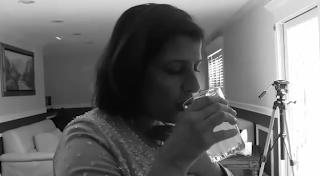
3. To solve those problems, I had to physically remove the objects from the shots and tell people to move away from the camera. I had to walk through their scenes with them and improvise on the spot.
4. The biggest problem that arose during the film process was shooting the film with two group members. Also, casting the actors was difficult because we needed a very evil step-mother and young girl to make the film a success. We had a very hard time with audio while filming. It was the first time we used a shot-gun mike and because it was a directional mike, we had to directly point it at the actresses' mouths, which was a challenge. When we transferred the footage to a computer, the audio was lost or very low. For some shots, the audio was absence entirely or the shot was very shaky.
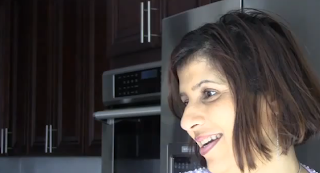
5. To solve these problems, I worked with my cinematographer the best I could to finish the 2-column script, film the movie, create the website, and complete other responsibilities. We cast the most available actresses for the role of the mom and the girl by association, which made the casting process much easier. To solve the audio problem, our editor raised the audio levels on Final Cut Pro, but it still had a lot of static. We re-filmed the shot that was shaky and the audio improved a lot, mostly because we didn't use a shot gun mic, but the mic on the camera.
Critical Evaluation of Finished Product
Script/Narrative/Story
a. The film develops a clear story around a character that moves through 3 dream sequences: murder by pills, murder by stabbing, and murder by suffocation. As the girl gathers her potential murder weapons, she is unaware that her step-mother was one step ahead of her the entire time. The protagonist (played by Marie S.)is a very timid and obedient daughter whose step-mother treats her horribly. Her hatred for the woman accumulates and finally one day when she is completing her chores, her evil side overpowers her innocent side. Unfortunately, as the corrupt plan develops, her naive character prevents her from succeeding.
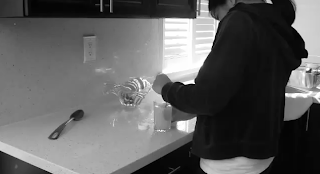
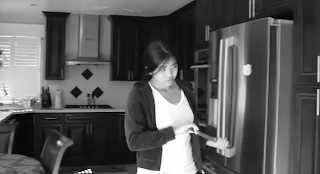
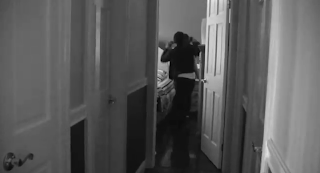
b. The film explores the theme of the tensions between mother and daughter and how sometimes emotions cloud people's reasoning. This usually leads to detrimental results.
c. I do think that the actions and lines are "in character" and is appropriate to the motivation and personality of the protagonist because Marie plays a very deceptive character whose intentions are to eliminate the source of her sufferings. Her actions are sly and malicious and she possesses the characteristics of an emotional unstable person who is a danger to herself and society (though she can use some practice in body movements). Her quiet and timid "Yes, Mam" line makes the audience believe that she is innocent and harmless, little do they know that she possesses an evil layer underneath. Her character in the real world contrast her character in the dream sequences.
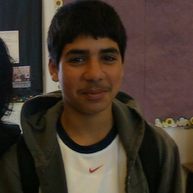



d. There is more action than dialogue in this film because showing is always better than saying it. The only dialogue is in the first scene and its purpose is to establish the relationship between characters. The mother is mean to her step daughter, and the father loves his daughter, but is controlled by his new wife in all aspects of his life. The remainder of the film consists of the girl completing her chores while daydreaming about murdering her stepmother in different ways.
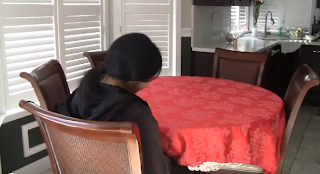
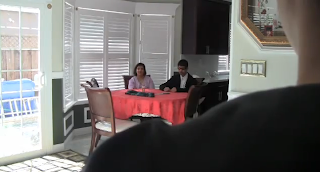
e. The climax was placed very uniquely. The climax is when the girl finds her stepmom and a detective sitting at the dining room table, with the murder weapons on the table. This shows the girl's defeat and the stepmom's surprising victory. It is shocking to discover that the step mom knew about the girl's plans all along.
Acting/ Casting
a. All three actors are appropriate for the personalities and physical attributes of the characters they played. Marie is timid and quiet and effectively manipulates the audience into believing that she couldn't possibly be so diabolic, yet she can be. The woman playing the stepmother is classy and loud and therefore is perfect for her role. The man playing the father is nonchalant and dresses casually, being suitable for the pushover character that we needed.
b. The two actresses were actually able to be their characters and work professionally, but the others were unable to do so. The actresses had great facial expressions and eccentric body movements to express their personalities. The other actors did not have emotion and were average in their acting.
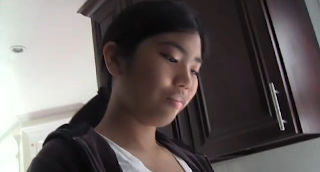
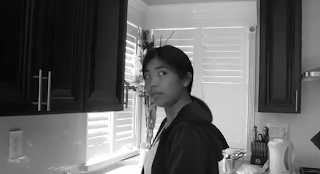
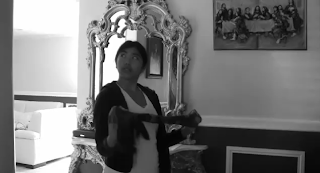
c. The talent gestures are meaningful and appropriate to the close up medium of television because the actresses and actor's performance were disciplined, creative, and stylized.
d.The dialogue was difficult to record due to mic problems and raising audio levels did not solve the problem completely. We couldn't dub the audio or re-shoot, so we just stuck with the static filled audio.
e. The talent pacing and energy level of the actors were maintained throughout the shooting by giving them time to get into character and practice quickly before each scene. They were completely professional and all the actors were reliable. They were nervous, yet excited about their first appearance in a short film. It was a new experience for all of them and it gave them an opportunity to be someone else for a change.
f. The costumes are appropriate for the time period and setting because the story is set at a suburban house in the present. The actors just had to dress like they normally do, but be a completely different person. Marie had to wear a t-shirt, jeans, sneakers. The stepmom wore a fancy blouse and jacket, black pants, and high heels. The father wore a polo shirt and jeans.

g. The wardrobe/costumes do provide adequate visual separation between scene elements and fall within limitations of the medium's brightness range. It stands out but are not too distracting from the action in each scene.
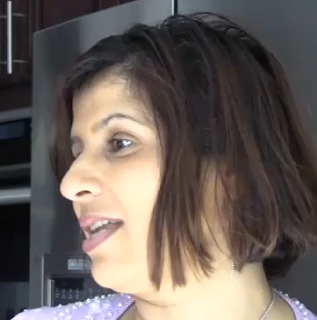
h. Make up was only used on the antagonist, the stepmom. It was crucial to establish that she was over-the-top to show her obsession with looks and thought highly of herself. This established her as the character that the audience is suppose to dislike. The girl doesn't have any make-up and her plainness shows her depression and blank life.
Edit/FX, Techniques or Concepts
a. The style of the title is appropriate for the nature of the production because the black glowing font depicts the evilness of the main character as she daydreams about murder. The smoky background shows the mystery of the film.
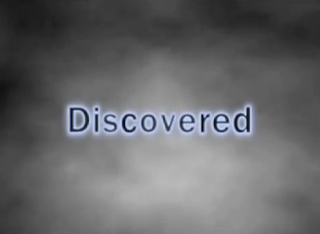
b.The title does give enough time for the audience to read it, but it could have remained on screen for a few seconds longer for the audience to fully react to the title.
c. All the cuts and transitions are motivated and in harmony with the pace and nature of the subject matter. A lot of long takes and fade in/ fade out transitions are used to heighten and prolong the tensions and add a sense of mystery to the film.
d. The visual perspective is maintained throughout and the camera remains on one side of the 180 degree line. The camera only switches angles and we try not to confuse the audience.
e. Fade in/ fade out transitions are used to transition from the real world to each dream sequence (3). The black and white saturation of the footage indicates that it is a dream sequence and color indicates that it is the real world.
f. The shot selection does follow what the audience expects, wants, or needs to see at each moment. For example, when the girl walks over to the fridge to see the list of chores she has to do, we as the audience expects her to follow what it says. Marie walks over to the sink in an attempt to wash the dishes, but suddenly her eye spots a knife. We would assume that she would pick it in the next shot and the following would be of her reaction to the object. These shot selection methods are repeated for each dream sequence.

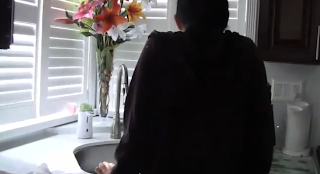


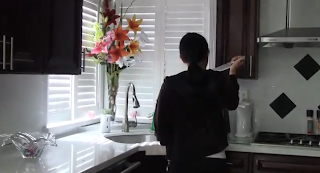
g. Technical and general continuity jump cuts have not been avoided in the film. It is difficult to keep each scene exactly as it is after each shot. During the shooting process, actors and crew members made mistakes, which was hard to correct in the editing process. Certain objects were moved between takes and it was difficult to remember how each prop was placed and exactly where the actors were standing in each scene.
h. The editing very smooth, which makes the film dynamic and entertaining. I especially love the jump cuts and the match action cut during the choking scene because it really emphasized the intensity of the situation. The most difficult edit to do are the dream sequences because the editor had to maintain the suspense and intensity of the scenes. We had to avoid long takes and had to ensure that the scene's shots were not too shaky since in was all shot handheld.


i. Each scene is long enough for the audience to have sufficient amount of time to grasp the information. Each shot in the first dream sequence is the longest because a lot of information had to be communicate. Some lasts at minimum of a couple of seconds and it is held long enough for people to generate the right emotion.
Sound FX/ Score
a. The type of music chosen is appropriate for the production because it compliments the action that is happening in the scene. Unusual or semi-fast tempo music is used during suspenseful scenes. Slow-tempo piano music is used during depressing or lonely scenes involving the girl.
b. The music is always loud enough to hear the piano songs, but not loud enough for the dream sequences score. It does not draw attention to itself or interfere with the intelligibility of the dialogue, but compliments it instead.
c. The audio is very clear in the kitchen scene with the father, step mom, and the girl, except the kitchen scene where in editing the volume had to be raised.
Cinematography
a. A variety of camera operations were used throughout the shooting of the film. Especially common was panning, extreme close-ups, zooming, different camera angles, over-the-shoulder shots, different camera heights and movements and loose framing. The camera movements are semi-shaky that usually it does draw attention to itself, but it does match the feelings of the chaotic predicament. The cinematographer made sure to give the actors enough head room and space to move around.
Production Design/Mis En Scene
a. The set design is appropriate to the time period of the film because it is set in the present at a family's suburban home. A set was not created, the film was shot on location in San Bruno.
b. The location is usually bright enough for each shot (maybe too bright even for some shots) having access to natural light sources or florescent lights indoors. There is sufficient key, fill and back illumination in all performance areas to render needed visual separation, depth, and detail. The locations are occasionally too loud due to outside noises and the voices of the home's owners.
Overall, the film was a success to me. It may not be what my group and I envisioned from the beginning due to the absence of one of our group members during the filming proccess, but it still worked. I'm especially proud of the actors/actresses and the overall theme/ message. I hope our emphasize on sound really comes through in our final edit. Enjoy audience members.
The short film that my group and I created is called "Discovered". We wrote the treatment and script as a group, although Jenna, our editor, did take the lead on it. The plot is about a teenage girl who is emotionally abused by her step-mother and fantasizes about three different murder plans. The household chores that the step-mother forces the girl to do gives the girl malicious ideas about ways to carry out the murder. We wanted to create this film in order to emphasize the significance of sound in cinema. We experimented with the mystery/ suspense genre, lighting, close-ups, camera movement, and sound. The target audience for this film would definitely be mature teenagers or adults due to the graphic images and the mature content. I think this short film is a very good idea because it explores the idea of children attempting to gain the upper hand through corrupt ways, though the outcomes may not be in their favor.


B. Commentary
1. My area of responsibility was the director and set designer. As director, I had to make sure the actors were in costume and in character as we were shooting. I had command the actors to do certain actions for each scene and make sure the cinematographer was doing her job. I had to collaborate with all my group members and make sure we were on schedule with the deadline. As director, I also helped create and maintain our film's website (run by Google). I also did minor jobs, such as creating titles, helping to write the script, compiling music, etc. As set designer, I cleared away unwanted objects and people on set and placed props where they needed to be. I made sure each scene is set up the way it is envisioned in the script.
2. Problems that arose in my area was the challenge of keeping unwanted objects away from the shots, such as people, tripod, and other objects. Another challenge was working with amateur actors because they were not used to acting. Keeping the set exactly the same between takes was difficult because a family was living in the house we were shooting in, so it was hard to respect their space while doing our job.

3. To solve those problems, I had to physically remove the objects from the shots and tell people to move away from the camera. I had to walk through their scenes with them and improvise on the spot.
4. The biggest problem that arose during the film process was shooting the film with two group members. Also, casting the actors was difficult because we needed a very evil step-mother and young girl to make the film a success. We had a very hard time with audio while filming. It was the first time we used a shot-gun mike and because it was a directional mike, we had to directly point it at the actresses' mouths, which was a challenge. When we transferred the footage to a computer, the audio was lost or very low. For some shots, the audio was absence entirely or the shot was very shaky.

5. To solve these problems, I worked with my cinematographer the best I could to finish the 2-column script, film the movie, create the website, and complete other responsibilities. We cast the most available actresses for the role of the mom and the girl by association, which made the casting process much easier. To solve the audio problem, our editor raised the audio levels on Final Cut Pro, but it still had a lot of static. We re-filmed the shot that was shaky and the audio improved a lot, mostly because we didn't use a shot gun mic, but the mic on the camera.
Critical Evaluation of Finished Product
Script/Narrative/Story
a. The film develops a clear story around a character that moves through 3 dream sequences: murder by pills, murder by stabbing, and murder by suffocation. As the girl gathers her potential murder weapons, she is unaware that her step-mother was one step ahead of her the entire time. The protagonist (played by Marie S.)is a very timid and obedient daughter whose step-mother treats her horribly. Her hatred for the woman accumulates and finally one day when she is completing her chores, her evil side overpowers her innocent side. Unfortunately, as the corrupt plan develops, her naive character prevents her from succeeding.


b. The film explores the theme of the tensions between mother and daughter and how sometimes emotions cloud people's reasoning. This usually leads to detrimental results.
c. I do think that the actions and lines are "in character" and is appropriate to the motivation and personality of the protagonist because Marie plays a very deceptive character whose intentions are to eliminate the source of her sufferings. Her actions are sly and malicious and she possesses the characteristics of an emotional unstable person who is a danger to herself and society (though she can use some practice in body movements). Her quiet and timid "Yes, Mam" line makes the audience believe that she is innocent and harmless, little do they know that she possesses an evil layer underneath. Her character in the real world contrast her character in the dream sequences.


d. There is more action than dialogue in this film because showing is always better than saying it. The only dialogue is in the first scene and its purpose is to establish the relationship between characters. The mother is mean to her step daughter, and the father loves his daughter, but is controlled by his new wife in all aspects of his life. The remainder of the film consists of the girl completing her chores while daydreaming about murdering her stepmother in different ways.

e. The climax was placed very uniquely. The climax is when the girl finds her stepmom and a detective sitting at the dining room table, with the murder weapons on the table. This shows the girl's defeat and the stepmom's surprising victory. It is shocking to discover that the step mom knew about the girl's plans all along.

Acting/ Casting
a. All three actors are appropriate for the personalities and physical attributes of the characters they played. Marie is timid and quiet and effectively manipulates the audience into believing that she couldn't possibly be so diabolic, yet she can be. The woman playing the stepmother is classy and loud and therefore is perfect for her role. The man playing the father is nonchalant and dresses casually, being suitable for the pushover character that we needed.
b. The two actresses were actually able to be their characters and work professionally, but the others were unable to do so. The actresses had great facial expressions and eccentric body movements to express their personalities. The other actors did not have emotion and were average in their acting.


c. The talent gestures are meaningful and appropriate to the close up medium of television because the actresses and actor's performance were disciplined, creative, and stylized.
d.The dialogue was difficult to record due to mic problems and raising audio levels did not solve the problem completely. We couldn't dub the audio or re-shoot, so we just stuck with the static filled audio.
e. The talent pacing and energy level of the actors were maintained throughout the shooting by giving them time to get into character and practice quickly before each scene. They were completely professional and all the actors were reliable. They were nervous, yet excited about their first appearance in a short film. It was a new experience for all of them and it gave them an opportunity to be someone else for a change.
f. The costumes are appropriate for the time period and setting because the story is set at a suburban house in the present. The actors just had to dress like they normally do, but be a completely different person. Marie had to wear a t-shirt, jeans, sneakers. The stepmom wore a fancy blouse and jacket, black pants, and high heels. The father wore a polo shirt and jeans.

g. The wardrobe/costumes do provide adequate visual separation between scene elements and fall within limitations of the medium's brightness range. It stands out but are not too distracting from the action in each scene.
h. Make up was only used on the antagonist, the stepmom. It was crucial to establish that she was over-the-top to show her obsession with looks and thought highly of herself. This established her as the character that the audience is suppose to dislike. The girl doesn't have any make-up and her plainness shows her depression and blank life.

Edit/FX, Techniques or Concepts
a. The style of the title is appropriate for the nature of the production because the black glowing font depicts the evilness of the main character as she daydreams about murder. The smoky background shows the mystery of the film.

b.The title does give enough time for the audience to read it, but it could have remained on screen for a few seconds longer for the audience to fully react to the title.
c. All the cuts and transitions are motivated and in harmony with the pace and nature of the subject matter. A lot of long takes and fade in/ fade out transitions are used to heighten and prolong the tensions and add a sense of mystery to the film.
d. The visual perspective is maintained throughout and the camera remains on one side of the 180 degree line. The camera only switches angles and we try not to confuse the audience.
e. Fade in/ fade out transitions are used to transition from the real world to each dream sequence (3). The black and white saturation of the footage indicates that it is a dream sequence and color indicates that it is the real world.
f. The shot selection does follow what the audience expects, wants, or needs to see at each moment. For example, when the girl walks over to the fridge to see the list of chores she has to do, we as the audience expects her to follow what it says. Marie walks over to the sink in an attempt to wash the dishes, but suddenly her eye spots a knife. We would assume that she would pick it in the next shot and the following would be of her reaction to the object. These shot selection methods are repeated for each dream sequence.


g. Technical and general continuity jump cuts have not been avoided in the film. It is difficult to keep each scene exactly as it is after each shot. During the shooting process, actors and crew members made mistakes, which was hard to correct in the editing process. Certain objects were moved between takes and it was difficult to remember how each prop was placed and exactly where the actors were standing in each scene.
h. The editing very smooth, which makes the film dynamic and entertaining. I especially love the jump cuts and the match action cut during the choking scene because it really emphasized the intensity of the situation. The most difficult edit to do are the dream sequences because the editor had to maintain the suspense and intensity of the scenes. We had to avoid long takes and had to ensure that the scene's shots were not too shaky since in was all shot handheld.


i. Each scene is long enough for the audience to have sufficient amount of time to grasp the information. Each shot in the first dream sequence is the longest because a lot of information had to be communicate. Some lasts at minimum of a couple of seconds and it is held long enough for people to generate the right emotion.
Sound FX/ Score
a. The type of music chosen is appropriate for the production because it compliments the action that is happening in the scene. Unusual or semi-fast tempo music is used during suspenseful scenes. Slow-tempo piano music is used during depressing or lonely scenes involving the girl.
b. The music is always loud enough to hear the piano songs, but not loud enough for the dream sequences score. It does not draw attention to itself or interfere with the intelligibility of the dialogue, but compliments it instead.
c. The audio is very clear in the kitchen scene with the father, step mom, and the girl, except the kitchen scene where in editing the volume had to be raised.
Cinematography
a. A variety of camera operations were used throughout the shooting of the film. Especially common was panning, extreme close-ups, zooming, different camera angles, over-the-shoulder shots, different camera heights and movements and loose framing. The camera movements are semi-shaky that usually it does draw attention to itself, but it does match the feelings of the chaotic predicament. The cinematographer made sure to give the actors enough head room and space to move around.

Production Design/Mis En Scene
a. The set design is appropriate to the time period of the film because it is set in the present at a family's suburban home. A set was not created, the film was shot on location in San Bruno.

b. The location is usually bright enough for each shot (maybe too bright even for some shots) having access to natural light sources or florescent lights indoors. There is sufficient key, fill and back illumination in all performance areas to render needed visual separation, depth, and detail. The locations are occasionally too loud due to outside noises and the voices of the home's owners.
Overall, the film was a success to me. It may not be what my group and I envisioned from the beginning due to the absence of one of our group members during the filming proccess, but it still worked. I'm especially proud of the actors/actresses and the overall theme/ message. I hope our emphasize on sound really comes through in our final edit. Enjoy audience members.
Monday, February 28, 2011
Critique for Alice In Wonderland Oral
IB Mark: 20
In my oral presentation, I attempted to address all aspects of the assignment. I was successful, and unsuccessful in the following areas:
My analysis of the extract was theoretical and in depth to an extent, though I could have discussed about certain subjects in more detail. My socio-cultural context in the beginning was quite strong and was insightful. I knew the historical setting of the film and its importance to the film as a whole. My voice was clear enough to understand and my presentation was organized by specific sections. I've done a lot of research and prepared for the oral in advance, and the preparation shows. My analysis of the mis-en-scene and cinematography was over the surface in some ways; however. My understanding of the film's theme is apparent and I discuss the significance of it and what the director's intent of this theme is. The reason the mark is not as high is because the total length of the oral was about 46 seconds longer than the allotted time. Also, I did not use a wide range of filmic terms in my analysis than I should have.
In my oral presentation, I attempted to address all aspects of the assignment. I was successful, and unsuccessful in the following areas:
My analysis of the extract was theoretical and in depth to an extent, though I could have discussed about certain subjects in more detail. My socio-cultural context in the beginning was quite strong and was insightful. I knew the historical setting of the film and its importance to the film as a whole. My voice was clear enough to understand and my presentation was organized by specific sections. I've done a lot of research and prepared for the oral in advance, and the preparation shows. My analysis of the mis-en-scene and cinematography was over the surface in some ways; however. My understanding of the film's theme is apparent and I discuss the significance of it and what the director's intent of this theme is. The reason the mark is not as high is because the total length of the oral was about 46 seconds longer than the allotted time. Also, I did not use a wide range of filmic terms in my analysis than I should have.
Wednesday, February 2, 2011
Narrative & Film Language of Alice in Wonderland
Part 2
IV. Narrative
1. How is this film constructed according to narrative/story being told?
Alice in Wonderland entails a rebellious and open-minded 19 year old woman named Alice who falls down the rabbit hole and returns to a surreal world called Underland, or what she calls Wonderland. The chosen extract starts at 1:17:17 and ends at 1:22:17. In this point of the film, the protagonist, Alice is conflicted with the decision of overcoming her fears to face the Jabberwocky, or residing within herself and back down from the battle. Alice is reassured by Absolem, the blue caterpillar, of who she is and what responsibilities she must take to initiate her growth as a person.
2. Is the narrative organized by plot or time sequence, or some other way?
The narrative is organized by time sequence.
3. Does the film use other principles than narrative sequence as a structure (for instance, an argument)?
A flashback occurs when Alice slips back into her memories of Wonderland, which makes her believe in Wonderland's existence and reject her previous assumption that she is dreaming. This realization causes her to discover what her destiny will be, in the surreal world and the real world.
4. What is the nature of our engagement with the story or characters?
Our engagement with the story is objective, where we can interpret the actions of the characters. In the extract, Alice initially runs away from the crowd who is awaiting her decision regarding the Frabjous Day battle with the Jabberwocky. However, it is her conversation with Absolem and his "insults" that drives her to discover her true identity and what she stands for. We, as the audience are introduced to her uncomfortable, timid girl and gradually see her growth in courage and determination.
V. Film Language and Representation: Alice in Wonderland
1. How are characters and issues represented?
The Oraculum and the evil Red Queen provides obstacles for Alice in Underland. The Oraculum, Underland's calendar, reveals that Alice is the only person who can slay the Jabberwocky and help the White Queen retrieve her crown from the Red Queen. However, as the Frabjous Day arrives, Alice's lack of confidence and fear overcomes her. She runs away from the crowd that expects her to fulfill her destiny, as stated in the Oraculum. Alice is faced with an impending decision, not about the Jabberwocky, but who she is and what she stands for. Some of the characters in Alice's Victorian society parallel the characters in Underland. For example, the Red Queen and the mother are parallels. The twins parallel the Tweedles. And the blue caterpillar parallels Absolem.
2. What is the style and effect of acting and performance?
The style of the creatures and people in Underland are confident, fearless, and caring. Their peculiar and strange performances are humorous throughout the film, yet give the film a sense of mystery. The Mad Hatter, for example, has a split personality. One side is insane, dark and angry, sometimes uncontrollable. The other is kind, gentle, and innocent. Very interesting to note is the changing colors of the eyes that correspond to the type of emotion he is portraying. His innocent side is dominant when he has a conversation with Alice about Frabjous Day the following day. His gleaming eyes and childlike voice when he talks show his innocent side as he ponders about Frabjous Day with Alice. The blue caterpillar, Absolem, is Alice's mentor. His offensive insults and advice for Alice reveals that he is the most intelligent creature in Underland. It is the confrontation with Abosolem on Frabjous Day that causes Alice to believe in the existence in Underland and in herself as a strong woman.
3. How is meaning created by camera angles, shots, and camera movement?
On Frabjous Day, a crowd is waiting for Alice's decision. It is a wide shot followed by a birds eye view shot. These shots match the ones in the beginning of the film when Alice's family and friends are waiting for her answer for a proposal. The wide shot
4. How is meaning created through proxemics, territorial design, or open and closed forms?
The Mad Hatter and Alice have a small proximity as they discuss the their thoughts about Frabjous Day and whether Underland really exists. The small proximity shows their close relationship that have developed during Alice's journey. The majority of the scenes of the extract are closed forms, because the scenes are composed of medium or wide/ extreme wide shots.
5. How is meaning created by editing and sequencing?
Editing is crucial to the film, especially during Alice's flashback of her childhood journey in Wonderland. Layer of footage overlap and opacity is used to replay scenes from earlier scenes. The sequence of the flashback is out of order and at least three seconds of each scene of young Alice is shown. The scene with Absolem and Alice is composed of long dialogue shots to emphasize the seriousness in the situation. This moment is when Alice realizes that Wonderland and everything in it exists and thus this realization initiates her courage to fight the Jabberwocky, and for herself in her society.
6. How is meaning created by lighting, shade and color?
During the Hatter and Alice's conversation on the balcony, the only source of lighting is the moon. On Frabjous Day, the "sun" provides the source of light and the brightness is ironic to how Alice is feeling. She is filled with nerves about her task and is far from feeling positive. The set and the characters are composed of great variety of bold colors that give the film a creative and different atmosphere. According to director Tim Burton, "The idea was to explore the nature of dreams". Blue is the dominant color in the film, Alice wears different forms of blue dresses and the settings most often have a hint of blue to them, such as the night sky above the White Queen's castle in the opening scene of the extract. Blue is the color of the caterpillar which represents his reliable and peaceful nature.
7. How is meaning created by sound and music?
As Alice runs away from the crowd during Frabjous Day, dramatic choir and orchestral music plays. This score shows Alice's distress; she is overwhelmed with the pressure people give her when they expect too much of her. The issue isn't that Alice is afraid to slay the Jabberwocky, but it is about her lack of self confidence to believe that she is able to accomplish anything. She is confused about who she is and what her purpose is in life. During the flashback, the musical score has a fast violin tempo and the dominant foley sound is the ticking of the white rabbit's watch that fades in and out. This music is used to compliment the quick overlapping scenes of Alice's memory of her last visit to Wonderland. It also can be interpreted as Alice's quick realization of the the actual existence of the place she thought was an impossibility. As Absolem fully wraps himself in his cocoon, a slow tempo choir song is heard, that emphasizes the beauty of metamorphosis.
8. How is meaning created by location, set design and mis en scene.?
Because the film is set in a surreal world, it gives the film uniqueness and the opportunity to stretch reality to far limits. The surreal world is just where Alice feels comfortable, unlike her real world Victorian society, where she live a planned out and restricted life. The surrealistic Wonderland is a place of endless impossibilities. Alice realizes that if these seemingly impossible things really can exist, then there are even more things that are possible to achieve in the real world.
9. Does the film make use of symbols, metaphors, or allegories? Share are they and how do they work within the context of the film?
Absolem is a powerful allegory for metamorphosis and transformation. As a wise caterpillar, he guides Alice in her quest to discover her true self and her inner strength. Throughout the film, as he approaches his cocoon phase, Alice also approaches the Frabjous Day. When Absolem is in the process of transforming, he helps Alice realize her true potential to do great things; thus, resulting in her gradual transformation into a confident, empowered woman.
10. How is meaning created by technical elements such as production design, mis en scene, composition, special effects (matte paintings, models or animation, computer generated images….etc.)
Tim Burton states, "Our goal was to go with slightly more naturalistic approach to the animation". The film blended the real world and the surreal world by manipulating real people to look slightly abnormal and also creating completely new creatures such as the Bandersnatch, Jabberwocky, and the Cheshire cat with CG technology. The special effects brought Wonderland to life and made Alice's experiences in Wonderland more realistic. The visual effects such as CG animation and motion capture is affected by the nature of the story because as Burton says, "With all the cast, it was important that they felt like they were both in the real and unreal world at the same time".
11. What emotional information is conveyed through the film making process (tone and mood)?
The tone transitions from despairing tone to a triumphant tone. Alice is overwhelmed with the expectation people place on her, so she attempts to escape from these expectations by running away. There is a sense of hopelessness during this scene. However, as she talks to Absolem, she gradually gains her confidence and determination. This scene possesses a positive and hopeful tone.
IV. Narrative
1. How is this film constructed according to narrative/story being told?
Alice in Wonderland entails a rebellious and open-minded 19 year old woman named Alice who falls down the rabbit hole and returns to a surreal world called Underland, or what she calls Wonderland. The chosen extract starts at 1:17:17 and ends at 1:22:17. In this point of the film, the protagonist, Alice is conflicted with the decision of overcoming her fears to face the Jabberwocky, or residing within herself and back down from the battle. Alice is reassured by Absolem, the blue caterpillar, of who she is and what responsibilities she must take to initiate her growth as a person.
2. Is the narrative organized by plot or time sequence, or some other way?
The narrative is organized by time sequence.
3. Does the film use other principles than narrative sequence as a structure (for instance, an argument)?
A flashback occurs when Alice slips back into her memories of Wonderland, which makes her believe in Wonderland's existence and reject her previous assumption that she is dreaming. This realization causes her to discover what her destiny will be, in the surreal world and the real world.
4. What is the nature of our engagement with the story or characters?
Our engagement with the story is objective, where we can interpret the actions of the characters. In the extract, Alice initially runs away from the crowd who is awaiting her decision regarding the Frabjous Day battle with the Jabberwocky. However, it is her conversation with Absolem and his "insults" that drives her to discover her true identity and what she stands for. We, as the audience are introduced to her uncomfortable, timid girl and gradually see her growth in courage and determination.
V. Film Language and Representation: Alice in Wonderland
1. How are characters and issues represented?
The Oraculum and the evil Red Queen provides obstacles for Alice in Underland. The Oraculum, Underland's calendar, reveals that Alice is the only person who can slay the Jabberwocky and help the White Queen retrieve her crown from the Red Queen. However, as the Frabjous Day arrives, Alice's lack of confidence and fear overcomes her. She runs away from the crowd that expects her to fulfill her destiny, as stated in the Oraculum. Alice is faced with an impending decision, not about the Jabberwocky, but who she is and what she stands for. Some of the characters in Alice's Victorian society parallel the characters in Underland. For example, the Red Queen and the mother are parallels. The twins parallel the Tweedles. And the blue caterpillar parallels Absolem.
2. What is the style and effect of acting and performance?
The style of the creatures and people in Underland are confident, fearless, and caring. Their peculiar and strange performances are humorous throughout the film, yet give the film a sense of mystery. The Mad Hatter, for example, has a split personality. One side is insane, dark and angry, sometimes uncontrollable. The other is kind, gentle, and innocent. Very interesting to note is the changing colors of the eyes that correspond to the type of emotion he is portraying. His innocent side is dominant when he has a conversation with Alice about Frabjous Day the following day. His gleaming eyes and childlike voice when he talks show his innocent side as he ponders about Frabjous Day with Alice. The blue caterpillar, Absolem, is Alice's mentor. His offensive insults and advice for Alice reveals that he is the most intelligent creature in Underland. It is the confrontation with Abosolem on Frabjous Day that causes Alice to believe in the existence in Underland and in herself as a strong woman.
3. How is meaning created by camera angles, shots, and camera movement?
On Frabjous Day, a crowd is waiting for Alice's decision. It is a wide shot followed by a birds eye view shot. These shots match the ones in the beginning of the film when Alice's family and friends are waiting for her answer for a proposal. The wide shot
4. How is meaning created through proxemics, territorial design, or open and closed forms?
The Mad Hatter and Alice have a small proximity as they discuss the their thoughts about Frabjous Day and whether Underland really exists. The small proximity shows their close relationship that have developed during Alice's journey. The majority of the scenes of the extract are closed forms, because the scenes are composed of medium or wide/ extreme wide shots.
5. How is meaning created by editing and sequencing?
Editing is crucial to the film, especially during Alice's flashback of her childhood journey in Wonderland. Layer of footage overlap and opacity is used to replay scenes from earlier scenes. The sequence of the flashback is out of order and at least three seconds of each scene of young Alice is shown. The scene with Absolem and Alice is composed of long dialogue shots to emphasize the seriousness in the situation. This moment is when Alice realizes that Wonderland and everything in it exists and thus this realization initiates her courage to fight the Jabberwocky, and for herself in her society.
6. How is meaning created by lighting, shade and color?
During the Hatter and Alice's conversation on the balcony, the only source of lighting is the moon. On Frabjous Day, the "sun" provides the source of light and the brightness is ironic to how Alice is feeling. She is filled with nerves about her task and is far from feeling positive. The set and the characters are composed of great variety of bold colors that give the film a creative and different atmosphere. According to director Tim Burton, "The idea was to explore the nature of dreams". Blue is the dominant color in the film, Alice wears different forms of blue dresses and the settings most often have a hint of blue to them, such as the night sky above the White Queen's castle in the opening scene of the extract. Blue is the color of the caterpillar which represents his reliable and peaceful nature.
7. How is meaning created by sound and music?
As Alice runs away from the crowd during Frabjous Day, dramatic choir and orchestral music plays. This score shows Alice's distress; she is overwhelmed with the pressure people give her when they expect too much of her. The issue isn't that Alice is afraid to slay the Jabberwocky, but it is about her lack of self confidence to believe that she is able to accomplish anything. She is confused about who she is and what her purpose is in life. During the flashback, the musical score has a fast violin tempo and the dominant foley sound is the ticking of the white rabbit's watch that fades in and out. This music is used to compliment the quick overlapping scenes of Alice's memory of her last visit to Wonderland. It also can be interpreted as Alice's quick realization of the the actual existence of the place she thought was an impossibility. As Absolem fully wraps himself in his cocoon, a slow tempo choir song is heard, that emphasizes the beauty of metamorphosis.
8. How is meaning created by location, set design and mis en scene.?
Because the film is set in a surreal world, it gives the film uniqueness and the opportunity to stretch reality to far limits. The surreal world is just where Alice feels comfortable, unlike her real world Victorian society, where she live a planned out and restricted life. The surrealistic Wonderland is a place of endless impossibilities. Alice realizes that if these seemingly impossible things really can exist, then there are even more things that are possible to achieve in the real world.
9. Does the film make use of symbols, metaphors, or allegories? Share are they and how do they work within the context of the film?
Absolem is a powerful allegory for metamorphosis and transformation. As a wise caterpillar, he guides Alice in her quest to discover her true self and her inner strength. Throughout the film, as he approaches his cocoon phase, Alice also approaches the Frabjous Day. When Absolem is in the process of transforming, he helps Alice realize her true potential to do great things; thus, resulting in her gradual transformation into a confident, empowered woman.
10. How is meaning created by technical elements such as production design, mis en scene, composition, special effects (matte paintings, models or animation, computer generated images….etc.)
Tim Burton states, "Our goal was to go with slightly more naturalistic approach to the animation". The film blended the real world and the surreal world by manipulating real people to look slightly abnormal and also creating completely new creatures such as the Bandersnatch, Jabberwocky, and the Cheshire cat with CG technology. The special effects brought Wonderland to life and made Alice's experiences in Wonderland more realistic. The visual effects such as CG animation and motion capture is affected by the nature of the story because as Burton says, "With all the cast, it was important that they felt like they were both in the real and unreal world at the same time".
11. What emotional information is conveyed through the film making process (tone and mood)?
The tone transitions from despairing tone to a triumphant tone. Alice is overwhelmed with the expectation people place on her, so she attempts to escape from these expectations by running away. There is a sense of hopelessness during this scene. However, as she talks to Absolem, she gradually gains her confidence and determination. This scene possesses a positive and hopeful tone.
Subscribe to:
Posts (Atom)